
What Uganda Taught Me About Health, Humanity, and Being Seen

I traveled to Uganda to serve. I returned understanding that health is bigger than healthcare and that the mission I thought I knew was global.
She couldn't have been more than two years old.
There were hundreds of children around us that day, laughing and reaching as we passed out candy. Somewhere in the middle of them was this tiny little girl.
She was crying.
She thought we had forgotten her.
I reached through the crowd and put a piece of candy in her hand. Then I wiped the tears from her face.
She stopped crying.
As she began to walk away, I slipped another piece of candy into her little hand.
I have a video of that moment. At the time, I thought I was simply making sure a child got some candy.
Now I understand why I can't forget her.
She wanted to know she had been seen.
I Went to Uganda to Serve
In February 2026, I left Washington, D.C., for a mission trip to Uganda, East Africa. Over the next several weeks, I traveled through cities, towns and villages throughout the country.
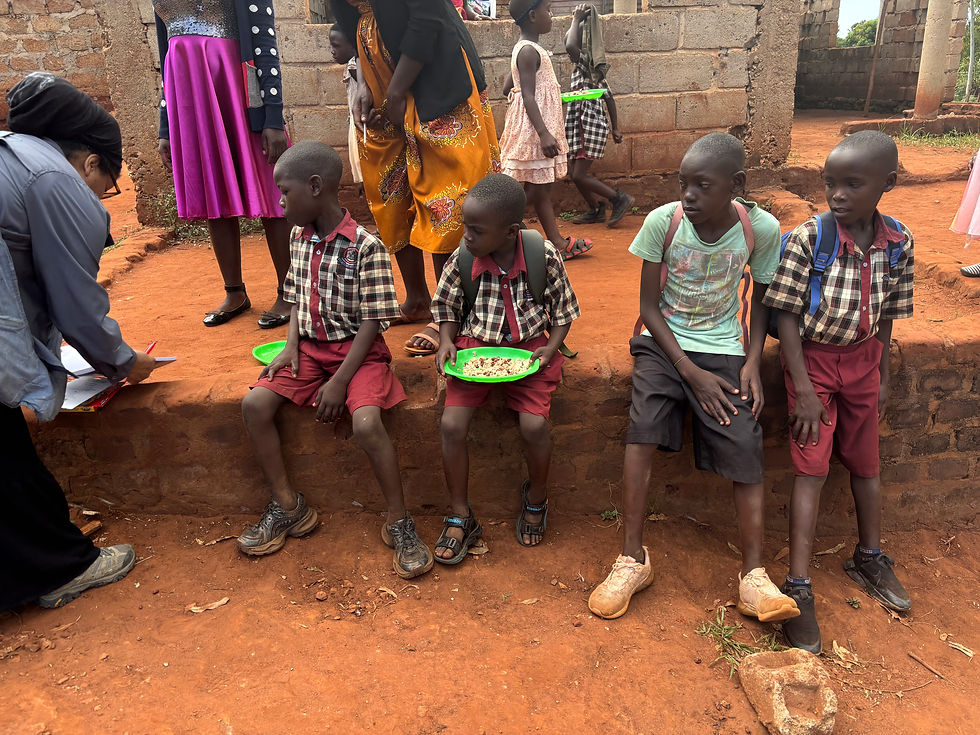
We visited orphanages and schools. We brought supplies and toys to children. I preached and participated in ministry. I led groups with women, including single women, widows, women whose husbands had left them and women who had experienced the unimaginable grief of losing a child.
I thought I understood the mission.
Help people. Encourage people. Pray with people. Give what we could. Serve.
But somewhere between sitting with women, holding babies, listening to children sing and standing in villages thousands of miles from home, something began changing in me.
I started seeing health differently.
The Women
The women are still one of the first things I think about.
They talked about money and raising children alone. Some were grieving husbands who had died. Others carried another kind of grief, the abandonment of husbands who were still alive but had simply left.
There were women trying to figure out, What do I do now?
I came prepared to teach them.
But I listened too.
And I found myself thinking about how much a woman can carry before any of it ever appears on a medical chart.
Grief. Financial insecurity. Motherhood. Abandonment. Fear. Responsibility. Hope. Faith.
What happens to a woman's health when all of those things are living in the same body?
I didn't have public health terminology running through my mind then. Today, I recognize many of the things I witnessed through what the World Health Organization calls the social determinants of health, the conditions in which people are born, grow, live, work and age.
I went to Uganda believing I was doing ministry.
I didn't realize I was also sitting face to face with many of the conditions that shape health.

What Does a Child Need?
The orphanages affected me differently.
The children I encountered were cared for. Their basic needs were being met.
But I couldn't stop thinking about one thing.
They didn't have their parents.
We can provide food, clothing, shelter and education. But how do you replace the person who knows exactly what your cry means? Who knows what you're afraid of? Who knows the face you make when you're trying not to laugh? Who tells you the story of where you came from?
Human connection shapes us.
Uganda's National Child Policy recognizes the importance of secure, nurturing family environments to children's development and well being.
But I didn't need to read a policy document to know what I felt standing among those children.
Children need more than survival.
They need belonging. They need attachment. They need to be known. They need childhood.
I watched something as simple as a soccer ball bring enormous excitement to a group of children. They ran, played and laughed. For that moment, they were simply children being children. There was something sacred about that to me.

Health Is Bigger Than Healthcare
In some of the villages we visited, people sometimes walked miles to collect water from a well. I saw outdoor latrines that were essentially holes in the ground.
Those experiences made me think about things I rarely considered at home. I turn on a faucet and expect water to come out. I flush a toilet without thinking about the infrastructure underneath it.
Safe water and sanitation are public health necessities. UNICEF Uganda continues to identify access to safe drinking water, sanitation and hygiene as important health issues, particularly for children.
Education raised similar questions.
Uganda has Universal Primary Education, yet families can still face costs for uniforms, meals, books and other necessities. UNICEF Uganda reports that these expenses can contribute to children missing or leaving school.
I thought about the children I met and how something as basic as whether a family can afford the costs surrounding school can shape a child's future.
The connections became clearer.
Water, education, economic security and human connection are all connected to health.
I visited a hospital while I was in Uganda.
And strangely enough, the hospital wasn't where I learned the most about health.
Joy Does Not Eliminate Need
I saw tremendous work ethic in Uganda. Hotel workers. Vendors. Women in markets selling things they had made with their own hands. I also experienced hospitality that has stayed with me. The smiles. The singing. The worship. The way people welcomed us. The faith.
Especially the faith. There were moments when I looked around and wondered how people carrying so much could worship with so much gratitude. My faith went with me to Uganda, but my faith was challenged there too. I found myself asking whether gratitude is really about how much we possess or whether it comes from somewhere much deeper.
Still, I am careful with this part of the story. There is an easy narrative about communities experiencing poverty: They have so little, but they're so happy.
That isn't what I mean. I don't believe suffering becomes beautiful simply because people learn how to survive it. Children deserve education. Families deserve clean water. Women deserve economic opportunity. Communities deserve access to healthcare.
Joy does not eliminate need. Faith does not erase inequity. But Uganda also taught me that having more does not automatically mean we have learned how to live well.
I witnessed community, faith, connection and gratitude in ways that made me examine my own life too.
I Thought I Knew the Mission
Our journey home didn't happen as planned. A conflict disrupted our flight through Dubai, sending us back to Uganda for several more days before we eventually traveled through Kenya and Paris to get home. Something happening thousands of miles away suddenly affected where I could travel, what it would cost, how safe I felt and when I could get home.
The word global became personal.
Today, as I prepare for a future in public health, I keep returning to Uganda. Public health needs data. We need to understand disease, disparities, access, outcomes and risk. But behind every number is somebody's life. Behind an education statistic is a child who wants to learn. Behind a water access statistic is someone carrying that water home. Behind an economic statistic may be a mother wondering how she will raise her children alone.
People are not problems to be solved. They are people to be seen. And that brings me back to her. That tiny little girl standing among hundreds of children.
I remember putting the candy in her hand. I remember wiping her tears. I remember watching her walk away and reaching for her one more time so I could slip another piece into her hand.
Such a small thing. But maybe some of the biggest lessons of my life have come through small things. I went to Uganda believing I knew the mission.
After Uganda, I understood that it was global. I came home understanding that health isn't simply what happens inside a hospital. It is connected to water, education, economic opportunity, safety, connection, community and dignity. But I came home with something even more personal. A deeper understanding of service. A larger understanding of health.
A stronger faith. And a conviction that wherever my work takes me next, I never want to become so focused on the size of a problem that I stop seeing the person standing in front of me.


Comments